Visual builder
01
Map process logic in a canvas your operators actually understand
Design flows with triggers, branches, conditions, loops, and approvals without translating requirements into engineering tickets.
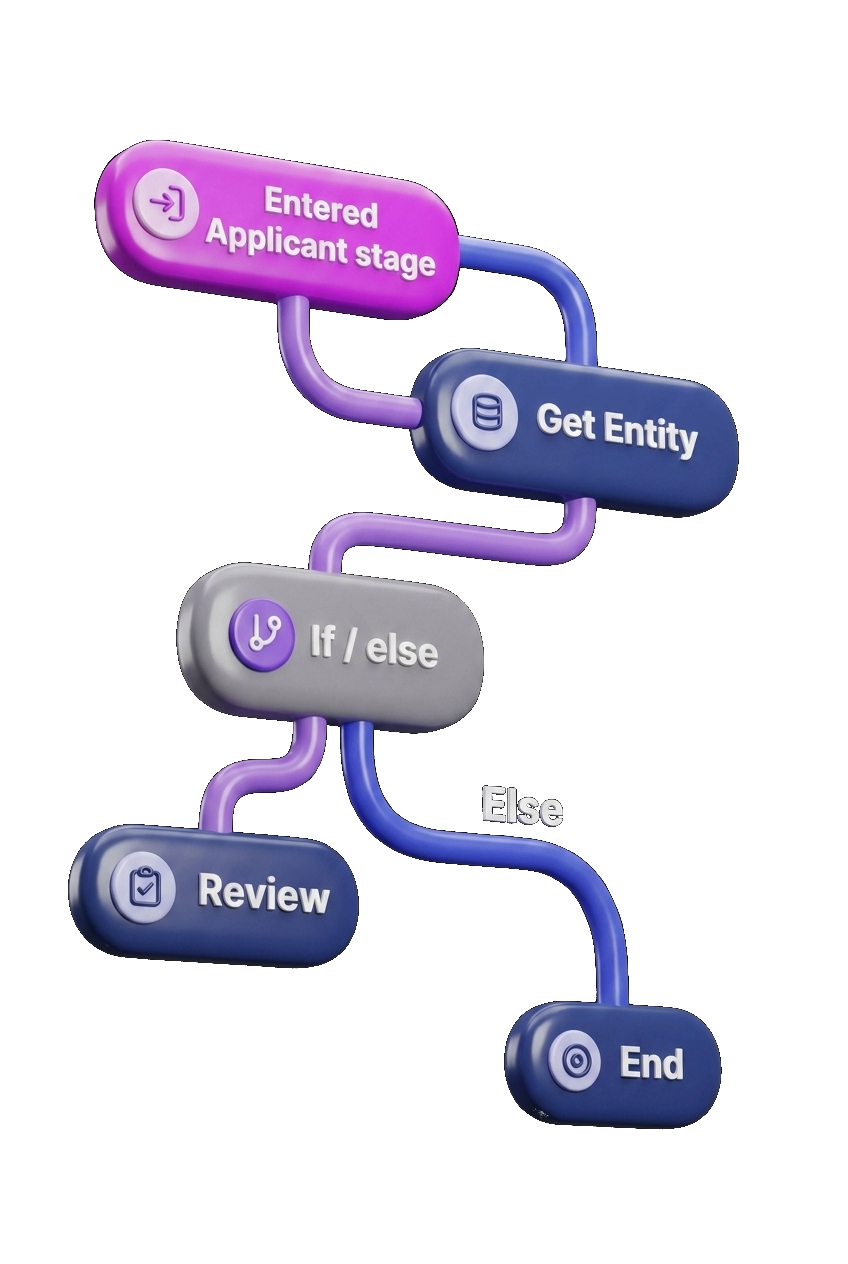
Use the visual builder to connect events, AI steps, approvals, and downstream actions across every suite. This is where your process becomes a product.
These modules turn requirements into live execution paths, so teams can build, review, and improve automation without translating every process into engineering work.
Design flows with triggers, branches, conditions, loops, and approvals without translating requirements into engineering tickets.
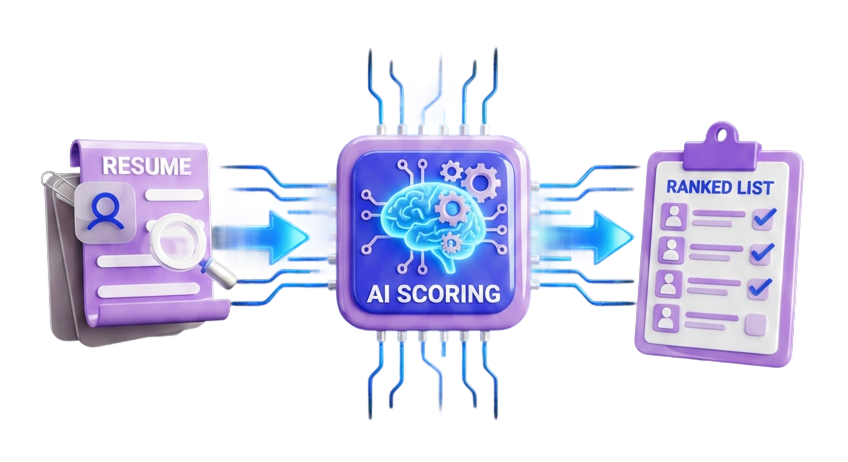
Extract fields, summarize documents, score candidates, classify requests, or prepare next actions from structured prompts and rules.
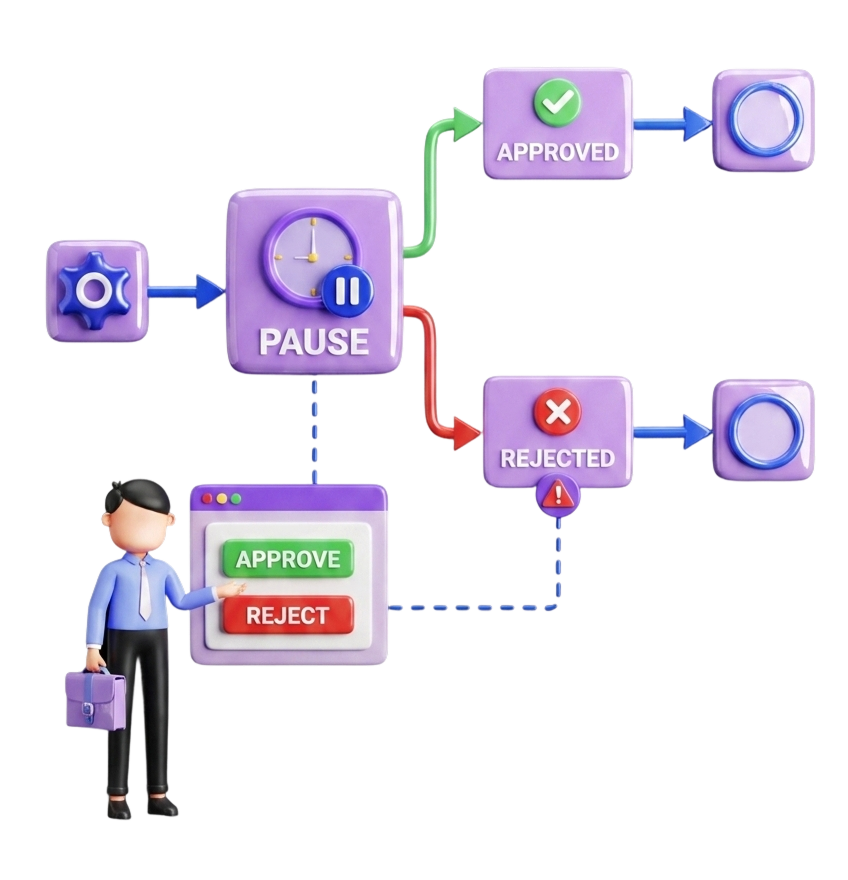
Route a decision to the right person, collect feedback, then resume the flow with a full audit trail.
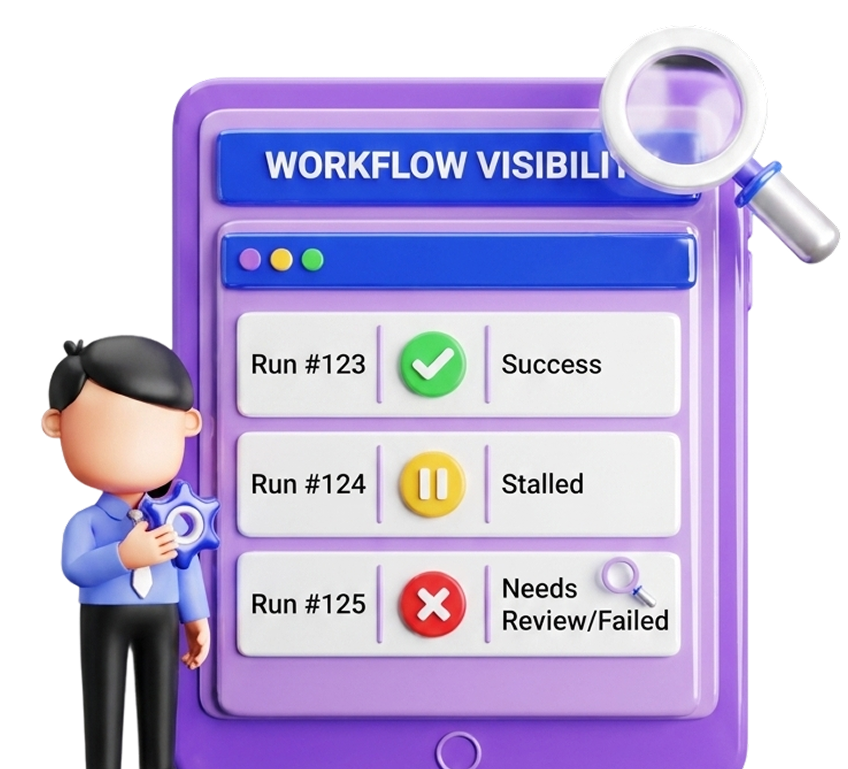
Every workflow has a run history, step output, and exception state so operations teams can improve the process, not just launch it.
The value is not just better data. It is better operating discipline around repeated work.
Automate the workflows that create the most manual chasing, then expand once the team trusts the system.
AI and automation move faster when approvals and exception review are built into the flow by design.
The same orchestration model powers employee ops, hiring ops, and CRM follow-up without separate tooling.
HR Ops, Talent Ops, and CRM become materially stronger when records, approvals, AI, and notifications run on the same orchestration engine.
Explore the suites that plug into the orchestration layer: HR Ops, Talent Ops, and CRM.
Launch your first automation in days, not quarters, and keep improving it without a rebuild every time the process changes.